

My Tour Divide bike setup for one of the most grueling self-supported bike races in the world, stretching over 4345 KM(2,700 miles) from Canada to the Mexican border. To survive—and thrive—in such an environment, your gear isn’t just equipment; it’s your life support system.
In this guide, I am breaking down my complete race setup for a 2019 Specialized Epic, including technical components, packing strategies, and the lessons learned from the trail.
1. The Tour Divide bike setup Foundation: The Bike & Frame
Table of Contents
ToggleChoosing the right frame is the first step in an ultralight strategy. This setup utilizes a 2019 Specialized Epic carbon frame with a custom paint job.
- Why the Epic? It offers a balance of cross-country speed and durability.
- Protection Tip: The video highlights the importance of managing paint damage from frame bags. Using protective tape or film under your bags is essential for long-term frame health.
2. Rolling Efficiency: Wheels, Tires, and Constant Power
When you’re riding 160+ KM(100+ miles) a day, your wheelset and power management are non-negotiable.
The Wheelset
- Wheels: Hunt Aluminum Rims for their reliability and ease of repair in the field compared to carbon.
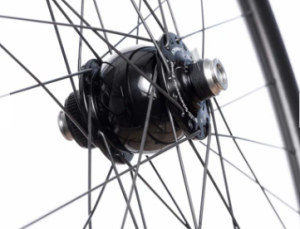
- Hub: The Son Dynamo hub is the heart of the electronics system, providing constant power to charge devices while pedaling.
Tires: The Vittoria Mezcal
For the 2025 Tour Divide, the Vittoria Mezcal 2.35″ tires were the choice for their low rolling resistance on gravel while still providing enough grip for technical sections.
3. The Packing System: Comprehensive Bag Breakdown
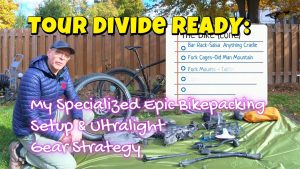
Weight distribution is the difference between a bike that handles like a dream and one that feels like a tank. Here is the bag-by-bag breakdown:
Bag Type | Brand/Model | Purpose |
Saddle Bag | Apidura | Lightweight storage for sleep systems and clothing. |
Handlebar Harness | Salsa EXP Cradle | Securely holds the front roll without bouncing. |
Top Tube Bag | Rockgeist Cache | Easy access to electronics and charging cables. |
Frame Bag | Revelate Designs Tangle | Tools, spares, and heavy items for a low center of gravity. |
Fork Mounts | Tailfin / Old Man Mountain | Extra capacity for water or specialized gear. |
Pro Tip: One of the most unique additions in this setup is the vertical mounting of a Swift Industries bag specifically to house a drone—proving you don’t have to sacrifice creativity for weight.
4. Lessons Learned for Ultra-Distance Racing
The video concludes with several hard-won insights for anyone planning a multi-day adventure:
- Weight Distribution: Keep your heaviest items in the frame bag or low on the forks. A heavy saddlebag causes “tail wag” and affects stability on descents.
- Electronic Management: Using a top tube bag like the Rockgeist Cache allows you to manage cables from your Dynamo hub directly to your GPS or phone without stopping.
- Contact Points: Never underestimate a comfortable road saddle and a customized TT bar setup for multiple hand positions.
Conclusion: Preparation is Everything
Building a Tour Divide-ready setup isn’t just about buying the most expensive gear; it’s about testing your system until it becomes second nature. Whether you’re running a Specialized Epic or a rigid steel frame, the principles of ultralight bikepacking remain the same: simplify, optimize, and protect.
Are you planning your first bikepacking trip? Check out My First Overnighter video [Beginner’s Guide to Bike Bags] https://youtu.be/0Xcri2osyhg
The Post-Ride Reward & Logistics
One of the most underrated aspects of the Simcoe County Loop is the “victory lap” back into Barrie. After 160km of pedaling, there is nothing quite like pulling into a local craft brewery or a lakeside café along the waterfront to celebrate your first successful overnighter. Because the route is a true loop, you end exactly where you started, removing the stress of coordinating shuttles or long commutes. For those coming from the GTA, the proximity to the Allandale Waterfront GO Station makes this a completely car-free adventure, allowing you to relax on the train home while scrolling through your trip photos.
When to Go: Timing Your Adventure
While the trails are open year-round, the sweet spot for the Simcoe County Loop is between late May and early October. Spring offers lush greenery, though you should be prepared for the occasional muddy patch on the North Simcoe section. Autumn is arguably the best time to visit, as the forest canopy turns into a tunnel of vibrant oranges and reds, and the cooler temperatures make the 80km-per-day pace much more comfortable. If you’re riding in July or August, just remember to pack extra hydration, as the exposed sections of the rail-trail can get quite warm under the midday sun.